Uttarakhand’s polyhouse support: the hills’ best-funded window
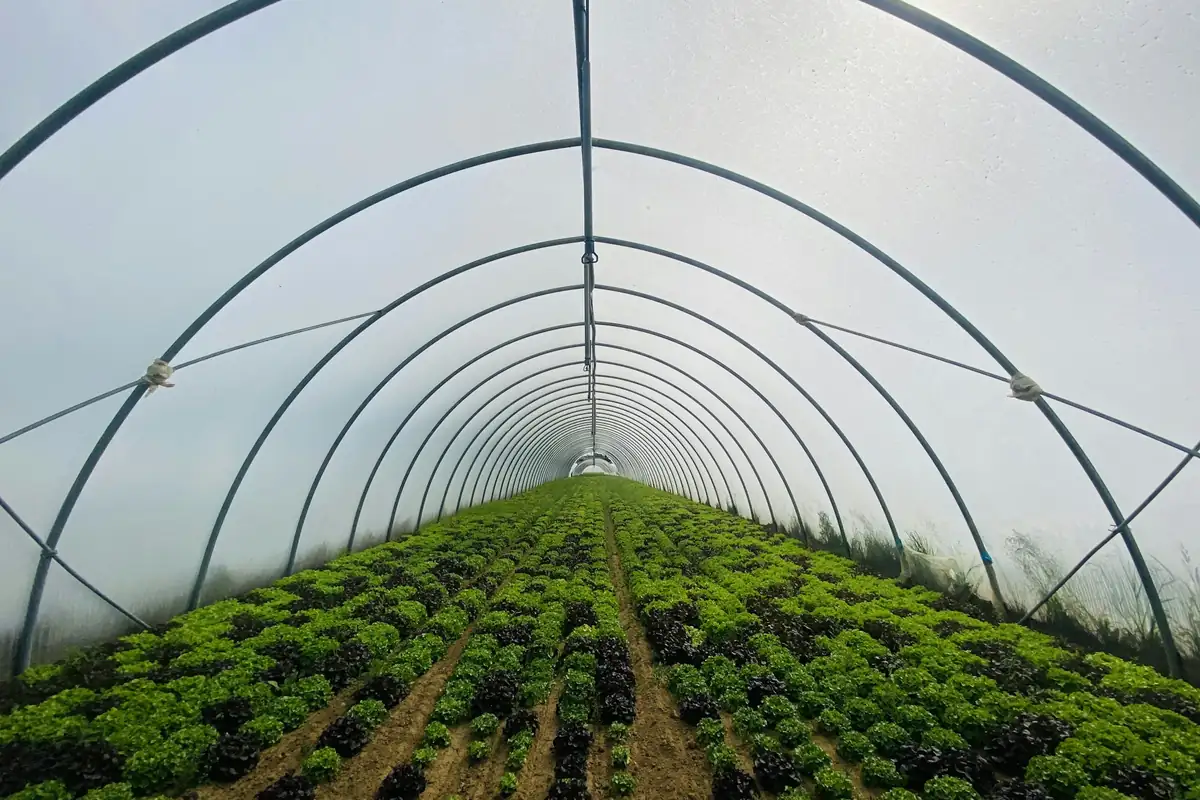
Protected cultivation is where Uttarakhand’s farm policy has put real money: cluster-based programmes for small naturally-ventilated polyhouses in hill districts, designed so a family plot can grow off-season vegetables and flowers for the plains markets below. Support levels in recent windows have been among the most generous in India — which is exactly why the fine print matters.
How the support is structured
- The state cluster scheme — small polyhouses grouped in village clusters, with the state carrying a large share of the cost. Percentages and eligible size classes change between windows and years: treat any flat number you’ve heard (including high ones) as “verify in writing at the district horticulture office”.
- MIDH pattern — for larger or standalone structures, standard credit-linked, back-ended subsidy against official cost norms, with hill-state sharing. Budget against the norm, not your quotation — the subsidy is computed on whichever is lower. Our MIDH guide →
- The stack — a polyhouse under the state/MIDH window, drip and fertigation components where eligible, and a PMFME-supported packing or drying line once production stabilises.
The paperwork that decides outcomes
The standard documents apply: land papers (or registered lease), an Aadhaar-linked bank account, quotations against the official cost norms, and a DPR a committee can approve without questions. Cluster schemes add one more: your neighbours — being part of a coherent village cluster application materially improves odds. GrowBros prepares the DPR and the file with every assisted project.
What GrowBros builds in Uttarakhand
Hill-spec BioChamber structures (snow-load, wind-rated), HydroLoop recirculating systems for water-tight terraces, and room-scale MicroFarm mushroom units with written buyback — the Uttarakhand hub has the full picture.